Coming off the back of completing Prey, Dishonored 2 and Deus Ex: Human Revolution + Mankind Divided over a period of 2 glorious gaming months, I felt compelled to post some thoughts about this most rare and incredible of gaming experiences: The Immersive Sim.
IMMERSIVE SIMS ARE RARE. And they probably always will be.
Mainstream gaming tastes do not, mostly, match up with the kind of
mature, considered, well-designed and carefully crafted immersive
experiences that have been created by incredible developers such as
Creative Assembly (Alien Isolation), Eidos Montreal (Deus Ex: HR + MD),
Ion Storm (Original Deus Ex), Arkane (Arx Fatalis and Dishonored) and
the oh so mighty Looking Glass Studios (Ultima Underworld, System Shock,
Thief). These are special, deep gaming experiences which don't come
along very often because the market does not "demand" them nearly as
much as Generic Sports Game -insert year-, Generic Open World
Collectathon, Generic First Person Shooter, etc.
This is sad. There is art to the game logic / visual / sound / level
design to any game but with Immersive Sims these things become far, far
more important and are often executed to a standard that very few other
developers match. I cannot wait to play the new System Shock and
Underworld games. The rewarding learning, exploring and discovery
offered by Immersive Sims are the gaming experiences I crave the most.
Apart from Demon's Souls and classic 90s shooters like Doom, Blood and
Descent... most other gaming experiences just fall flat for me.
Wednesday, 19 July 2017

Tuesday, 29 November 2016
STALKER Call Of Pripyat
(2016 Note: In February 2010 I wrote this piece about the third Stalker game intending to post it somewhere but never got around to it. Here it is!)
Call of Pripyat shares none of the frustrations of Clear Sky, it brings back the FUN of the original game, and improves upon it in a multitude of ways. Yes, this is still Stalker, and the game mechanics are similar: open world, shoot blokes, avoid mutants, hunt anomalies etc. But the faction wars are toned down, and you feel like you actually stand a chance from the off. At first you are somewhat fragile, but not stupidly vulnerable. I started venturing out to places and noticed that, like the better-tuned RPGs, there were areas that I could just about tackle, but others for which I'd have to improve myself before I could return to them. Feels just right.
Call of Pripyat is designed to be "open world" immediately. The main plot arc isn't entirely linear, the first 5 "quests" for it can be tackled in any order. The "world" comprises 3 large, distinct areas that are naturally shaped and do not feel like long corridors. Keep walking in any direction and you'll see one completely different thing after another, a wrecked ship, swamps (very scaled down compared to Clear Sky), chasms, bridges, burned farms, anomalies, plateaus, and buildings.
Day and night cycles are still there, and you have a permanent clock in the main hud. There are two weapons slots, in which you can put whatever you like. This was curiously limited in Clear Sky. CS got one thing right with artifacts: they were hard to find. This is still the case, and detectors are required, making for a tricky but compelling challenge whenever you attempt it. Earning money is tough, but a little easier than Clear Sky, and feels about right. Shotguns are no longer nearly-useless, and the new Protecta is a solid, satisfying weapon. Weapon upgrades are present again, but futher tuned, and even more essential. Some of the dread and scares of the original game are present, if not to the same extent. There are a lot of things that, if not frightening, are certainly odd and will put you on edge. There's more "weird" in this game than "scary", put simply. How many FPSs engage your imagination as much as your trigger finger?
And I found it absolutely reliable, too. No crashes here.
Niggles:
Realistic but frustratingly small carry limit early on.
That damned view-bob.
Vanilla game could do with more AI spawns.
Short, some are saying 20 hours.
Could do with more dungeons!
Weapons degradation is a more prominent factor than Clear Sky, and if anything happend a tad too "rapidly" for my liking.
You'll wish they mapped more of Pripyat (but what's there is fantastic).
To conclude:
One of the best first-person-shooters ever but certainly not perfect. A unique, compelling and satisfying experience, and recommended to absolutely everyone. Google for the "SMRTER mod" after you have played the full game, to add more goodies and replayability.
Tuesday, 29 April 2014
Dark Souls 2: Soulless Fanfiction.

Dark Souls 2 is a reasonably successful experience on its own terms, but stumbles and sometimes outright fails for a variety of reasons when examined closely.
40-50 hours into Dark Souls 2 I came to the conclusion I just wasn't enjoying myself. What was different? Something had to be, after all, I eventually became used to Dark Souls and learned to greatly appreciate it for what it was. I still believe DkS achieves masterfully what it sets out to do and to those with the right mindset it is an engrossing experience.
If Dark Souls ever was "fun", that "fun" has been carefully syphoned from its sequel leaving greater frustration than ever before. It seems obvious to me that the changes in the dev staff have displaced the careful design present in DkS, because its sequel is full of issues. I'm simply not enjoying it as much. Don't play it solo, play it online and request help wherever possible, is my recommendation. And use a character that has good magic and / or a decent bow. Melee characters are just not fun this time.
Combat suffers due to less accurate controls (I'm using the same controller), finickier parrying, unpredictable back-stabbing (when I managed to, I was never once standing "at the back" of an enemy, only off the side a little), and worse of all: unreliable invincibility frame placement during rolls. Agility changes this, but it never becomes entirely "learnable". Weapon degradation is too rapid. The reason for joining covenants is never explained, and leaving them has no penalty any more.
The considered one-on-one battles of Dark Souls were tense and compelling, but much of DkS2 has the player face multiple enemies at once. In fact enemy placement is sometimes a total clusterfuck and tends towards unreasonable. The Black Gulch must surely be a level design nadir for From Software. Really, F*CK the Black Gulch: Hundreds of poison spitters and instant-death submerged trap hand mouth things that shields do NOT protect you from. The boss is ridiculous as well, and ALWAYS locks on to you. (Many bosses conform to a formula: oversized humanoid with oversized weapon, a few similar melee attacks, and a way to catch you when you're behind them.) Soldier's Rest is a mess: teleport to it, exit the building housing the bonfire, and then THREE old ironclads are on your tail within moments, plus a few undead soldiers. The run from Huntsman's Copse -> Bridge Overview to the Undead Purgatory is endlessly frustrating, punctuated by those "dark staff" monsters that kill in seconds. Many bosses, like the Pursuer, just take far, far too long to kill even with upgraded weapons. I'm struggling to think of occasions in DkS where the game felt as unfair, slow, or tedious. Maybe, maybe going through the Undead Burg the first hours, but that is rather due to player inexperience, not poor design.
Level design is haphazard, sometimes lazy and boring, other times inspired. But never coherent. I'd love to see the invisible elevator that takes one from Earthen Peak to Iron Keep... from the OUTSIDE. After killing the four boss souls (why?) ... some stones are removed from an arbitrary invisible wall to allow progress. The Tower Of Flame is essentially a series of linear corridors with a few battles and a single branching point. There's much more, but the game is littered with these issues.
Useful items are scarce for a great deal of the game. Titanite is given out so frugally, and cannot be bought from an "unlimited" source until very far into the game, meaning upgrades must be chosen with extra care. It's quite possible to be stuck with a character that is otherwise well built, but has rubbish weapons that cannot be upgraded due to a lack of souls and titanite. Oh and due to the monster spawn limit, farming isn't an option. I faced the Iron Keep with weapons that just weren't quite good enough and I'd spent all the souls and Titanite I could. An ARBITRARY limit on purchasable Titanite shards is then lifted after completing the Iron Keep. WHY ?? WHY??? Another boneheaded decision!
Most NPCs have no reason to exist other than to provide items, complain to the player, and then sit in Majula and do bugger all for the rest of the game. Why must I talk to a specific NPC to level up? This is one of the few hold-overs from Demon's Souls that seems pointless. And why am I in Drangleic in the first place? This is never clearly explained, I'm just here to ... kill four bosses? Why? DkS1 made it clear the player is there to succeed Gwyn and ignite the first flame.
Not a successful sequel, Dark Souls 2 strikes me as ill-conceived fan-fiction. Those that remember Ultima 9 know how that plays out. This game is not recommended unless you can forgive all these issues.
I also recommend watching Matthewmatosis' video:
Edit: Operating very much at the extreme end of the critical scale Michael Thompson's particularly damning article thrashes the game. While I would argue some measure of suspending disbelief is always necessary when gaming, in this case, Dark Souls 2 is simply not worth it. But Thompson comes across as though gaming - for him - is a penance, so it's difficult to resonate with his thoughts.
Thursday, 26 December 2013
The Dark Mod: PC Gamer's Mod of the year. Stealth action at its finest, and it's FREE.

The Dark Mod
Of course it's the Mod of the year. TDM is an exceptional example of creative minds coming together to create a cohesive, immersive stealth action experience in a brilliantly-realised dark-ages-fantasy world. Superb. Highly recommended.
Note: Doom 3 is no longer required. As of TDM v2.0, it is a completely independent game that doesn't need anything else to play, just download and install.
Tuesday, 8 October 2013
Mastering Technique And Discussion With Matt Colton
An insightful and educational video that takes a hands-on (ears-on?) approach to discussing the art of mastering. Very much worth a watch.
Or watch it at Youtube.
Or watch it at Youtube.
Friday, 10 May 2013

Sunday, 31 March 2013
Mainstream gaming and Ludonarrative Dissonance
Today I wish to draw attention to a collection of mails between Matthew Milewski and Clint Prentice of the gaming blog Error! Not Found. They discuss the so-called ludonarrative dissonance that occurs during the course of the new Tomb Raider game. Suffice to say, I played two hours of it and then uninstalled it in extreme disgust:
http://errornotfound.org/2013/03/08/tomb-raider-on-ludonarrative-dissonance/
http://errornotfound.org/2013/03/08/tomb-raider-on-ludonarrative-dissonance/
Friday, 29 March 2013
Ceephax Acid Crew
 Andy Jenkinson is Ceephax Acid Crew, a one-man Acid techno machine. His music is brilliant. His earlier material is closer to "classic" acid music, but since 2009s "Ceeland" has become a lot more melodic. Ceephax music is a refreshing antidote to the incessant copious obsession with minimalism prevalent today. It is a melodic, occasionally psychedelic, melting pot of acid, techno, house, breaks and electro and it never fails to be engaging.
Here are some interviews with Andy:
Bleep 2010
The Digital Fix - January 2010
Gogbot - 2011 in Dutch
Smart Shanghai - May 2012
There are far too many great Ceephax tunes to post here, so here's a couple:
Mediterranean Acid
Commuter
Thursday, 28 February 2013
Teleglitch: A masterful immersive action experience
I've recently had the pleasure of discovering a fantastic indie game entitled Teleglitch. So addicted have I become to it, that I have been playing it non-stop and contributing to the Teleglitch Wiki. Here is the introductory text I wrote, it provides a description of the gameplay without spoiling much. I recommend playing this game, it is the best recent immersive gaming experience I have had the delight of encountering, and it isn't even a first-person game:
Teleglitch employs a number of gameplay elements to create an immersive "action horror" experience.
As a military scientist on a backwater, uninhabitable planet, you find yourself trapped in a research station where things have gone horribly wrong. Get to the teleporters on each of the 10 levels, and you will escape. This is the simple premise of the game, but the gameplay itself is certainly not trivial.

The core of the game can be described as a "twin-stick shooter". Using WSAD (or similar) keys moves your character, while the mouse aims them. Left click either uses an item, or swipes with a knife. Don't resort to this if you can help it. Right click brings up an "aim line", which extends depending upon how far the mouse cursor is from your character. With a weapon equipped, left-clicking while also holding right-click will shoot. Some weapons auto-fire, others shoot once per click.
There is a basic but effective inventory system, listed down the left-hand side of the display. The player can use the mouse wheel to select items. Q drops them, holding E allows them to be re-arranged. White items are weapons, red are explosives, blue are healing items, yellow are special items, and green are parts for crafting.
Yes, Teleglitch also has crafting and it, too, is basic, but tremendously effective. Pressing C brings up a list of craftable items, based upon what is in your inventory. Again, using the mouse wheel allows one to select the item required, and left-clicking crafts it. If there is no space in your inventory, you will drop the item.
Levels are made up of interconnecting rooms, and these are randomly placed based on various "parts" each level has. They can be in various orders, but you will always start and finish in teleporter rooms. You can blockade doors with furniture nearby, by simply pushing it. There are secret rooms which must be shot open to gain access.
There are various audio cues that can help the player discern what they may be about to face, and where enemies may be. Teleglitch employs locational audio with some effective audio design. The result is an immersive experience, despite the pixelated visual style.

As you progress through the game, some of the secrets of Militech and their research are revealed, and you will face larger and more dangerous enemies. In classic Doom fashion, you will find that almost every weapon will be useful in different situations. You only have so many inventory slots, but you will want to keep a variety of weapons handy for different enemies. Some may be slow but take many shots, others will be fast and in larger numbers attemting to swarm you, often you will meet many different enemies at once. Combine this with the thick atmosphere of dread, the highly rewarding exploration (storage boxes with medical items become rare treasures), the visceral combat and the distinct feeling of place, and Teleglitch ultimately becomes a unique experience that you will find difficult to put down, or forget once you are finished.
The developers are - as of this writing - putting the finishing touches to the Mac port, and are then looking to add more levels and content. Be sure to consult www.teleglitch.com for more details.
Tuesday, 12 February 2013
Exai, not exciting. At all.
So Autechre have decided to drop another album on us, and not only that, it's a double. Needless to say it will take a long time to fully digest all of it, but having had a lot of trouble enjoying it even after a couple of listens - which was quite the opposite reaction I had to the magnificent Oversteps - I'm already feeling rather disappointed with it. So my initial feelings are as follows:
On Oversteps, Autechre made a big step back to melodic composition augmenting their convoluted rhythms and textures. I wasn't expecting Exai to be "the same" - this is Ae after all - but it often sounds to me like a completely different artist than those involved with Oversteps (yes, I'm aware it's still Booth and Brown, the point still stands).
Exai is the first Autechre album that adds NOTHING to their "legacy". It is a concoction of the industrial bleakness of Confield, mixed with some of the masturbatury rhythmic excess of Draft / Untilted, and the atmospherics of Quaristice. Occasionally, echoes of Oversteps drop in here and there, but this is Autechre back to being "obtuse" and excessively programming-focussed. Many of these tracks go on for far, far too long and do nothing new that we have not heard before.
Bladelores is one particular nadir I find: it's just one filtered pad that never shifts notes, merely sustaining under ridiculous beat-munching for far, far too long. Sure, they spent a lot of effort on going nuts with the beats, but one pad? For most of a 12~ minute track? Lazy!
Flep, tuinorizn, deco Loc, vekoS, 1 1 is, prac-f and Fleure stand out for me, as all being drum-focussed workouts, favouring obscure, intentionally difficult rhythms and textures and little else to latch on to. On the occasions that pads, leads, plips and squelches do form some sort of melodic layers, they often do so without forming anything memorable. recks on, irlite (get 0), runrepik and YJY UX are good examples of this.
jatevee C has some delicious synth work though, with some off-kilter donks over those huge pads. T ess xi follows that with some of the best chords on the album, recalling old Megadrive soundtracks put through the wringer, though I'm less fussed with the latter half where it degenerates into irritated splutters. cloudline recalls some of Ae's LP5 / EP7 era work, with its skittering, destroyed hip hop beat underlying some "barely there" synth stabs.
Spl9 has some punch and intensity with some quirky melodies over some huge beats. But this is rare on Exai, had there been more Mcr Quarter-style industrial ear-bleeding workouts, I'd have approved. No the vast majority of it feels like Confield mk 2 with somewhat more elaborate MAX patches. Disappointing and tedious. Exai will likely convince many that they are listening to a higher art form, despite being quite a vacuous and unmoving experience. Oversteps remains their best.
Sunday, 10 February 2013
Doom Maps (10-2-2013)
CAFEBRK1.WAD: Coffee Break Episode 1 by Matt Tropiano

I've played a fair few MegaWADs over the years. While it's tempting to assume that a 32-map monster WAD is where most of the fun is to be had in Doom's copious range of fan-made addons, it would be doing many good map authors a disservice to ignore single and "episodic" map packs only because they somehow appear to offer "potentially less" gameplay.
A few days ago I reviewed a couple of standout single WADs, this time I took on Coffee Break which is an 11-map "episode" that's been brewing since 2009. Matt says he decided to release this as is, despite not having a full 32 mapset (his original intention), and it was a damned good thing he did. This is one of the better episodes I've had the pleasure of playing.
Highlights include Map 4 "Toxic", set in a dingy waste processing facility. Featuring a claustrophobic crossroads / hub structure with the usual keycard-locked doors surrounding a central area. In this central area are two conveyor belts pushing toxic barrels, this is one of those cool map features that not only serve to give the player the impression that they are indeed running around a dangerous waste facility, it is tremendously useful in the opening fight!
 Map 5 "Control" goes for a more open-plan design, initially challenging the player with multi-directional battles with imps and sergeants and only a minigun to fight with. Starting in a typical base room, the player is then thrust in an outside area surrounding a central room inaccessible at first. Like all the maps, Control features cunning traps and monsters placed at varying levels making good use of height. One of the greatest aspects of Doom's game-play is the challenge of dealing with fire from various directions and distances. This isn't a case of running forward, shooting and hiding behind cover a-la Call of Duty.
Map 9 "Channel" is another highlight. Starting in a room connected to a monster-strewn outside area, this unusual flash of green is connected to an ochre atrium with some challenging rooms, trickily-placed Revenants, and a fair bit of vertical fighting crossed with some touch-and-go monster traps. The final section takes place in a large stream of water dug into some earthy areas. Here the map introduces some high-level firepower and throws a ton of monsters at you, and I found it easier - and more thrilling - to attempt speed-running this section.

I'm not usually fond of "MegaWADs" where pistol starts are suggested, instead preferring to carry over weapons onto maps that "keep this in mind." But I played Coffee Break like this and it kept up a consistent and steadily growing difficulty (at UV -fast, as always), and gradually more intricate level designs with superb visuals and monster placement. Play it as soon as you can.
Saturday, 9 February 2013
Yamaha UX256 USB MIDI interface

There is a distinct paucity of multi-port MIDI interfaces being released these days. It's not difficult to understand why, iOS and "In The Box" software-based music production setups are increasingly more common nowadays. But for those that wish to keep their hardware synths and effects connected to and controlled from a modern DAW such as Reaper, Ableton, Studio One, Logic etc etc. it can be difficult to find a reliable MIDI interface with more than 2/3 ins and outs, and full support for newer OSs.
It just so happens that Yamaha, being the awesome people that they are, released Windows 7 drivers (32 AND 64-bit! See the support page here they've updated them for Win8, even.) for this excellent little 6-in / 6-out MIDI interface. And I bagged one for about £25 on eBay.
It has worked flawlessly for me, in Reaper, but even more brilliantly it is truly multi-client. I've had Ctrlr, Reaper and MIDI-OX all running at once, playing notes from my master keyboard through the UX to a separate rack synth and not a single "MIDI interface not available" error in sight.
The UX256 is a tremendously rugged little half-rack unit housed in a metal exterior, and it feels quite substantial. Probably one of the best purchases I've made, and I'd heartily recommend it for anyone needing such an interface. There's very little information about them on the 'net, and only a couple of less than glowing reviews (Sound On Sound seemed to like it though). The new drivers have never given me trouble, and apparently it works in Linux, too. I'm not sure it'll work on iOS, but I'll update this post if I have any luck.
Thursday, 7 February 2013
Doom Maps (7-2-2013)
ADMSM.WAD: Administration Center by Sergeant_Mark_IV
 This map has a fairly typical hub-style layout, you begin off one branch, play through some linear rooms leading to a crossroad of sorts, then proceed to find each keycard to open the appropriate doors. The game-play ramps up appropriately swiftly for a single map, and it was only a few minutes running through some imp-infested white corridors before I was greeted by a hell knight in an office!
The main hook of this map isn't just the layout, but the visual style Sergeant goes for: A foyer, filing rooms, office cubicles (this is the area you'll have to cross through a few times - the cubicle walls make for some useful cover), a dimly lit storage room make for a refreshing change from the usual military base designs. It didn't take me very long to finish, perhaps half an hour at most - and I play every map on Ultra Violence with fast monsters - but it was a memorable little journey with a perfect challenge level, a couple of cool traps, and some unpredictable monster placement. For a "speedmap" this is worth your time.
BLRVOUTP.WAD: Bloodriver Outpost by Henri Lehto
Ah, some ZDoom features! I find it makes a pleasant change to play the odd map with slopes, swimmable water and the like. Bloodriver Outpost makes good use of both: this is probably the first occasion I've had to crouch under some slopes to pick up some items, in Doom!
 A cramped base entrance opens almost immediately to an open area (shown in the image), though I was already given a super shotgun, I was assaulted on all sides from Cacos, imps, and a few hitscan enemies. A couple of quick runs to pick up some enemies, and peeping my head out of the nearby secret, was enough to get some infighting going amongst the monsters, and this eased things somewhat.
A few button presses and a quick swim later, I reached the other side of the open area, leading into more base rooms and enemies from various directions. The level design move to a more room-based Quake 2-style at this point, punctuated with one or two more outside areas, with varied monster choice and placement keeping things interesting. The only irksome point with this map is that it becomes a button-fest, doors, rooms, floors opening progressively as you kill enough enemies to hit the next button.
Even with the caveat this is strongly recommended, I enjoyed my time with this map and found the difficulty just right. I'm not against using (G)ZDoom features in Doom maps, and in the right hands they augment fun map design with elements that can bring out further diversity in the gameplay. Good job Henri, keep it up.
Wednesday, 29 August 2012
Dark Souls: It 'aint King's Field, sadly.
From Software released Dark Souls on PC in the last few days. So now that I could finally take the opportunity to try their new RPG series, having enjoyed King's Field so much, I tucked in. And found the experience disappointing:
There are major issues with Dark Souls that are severely diminishing my enjoyment of it.
Firstly, it is not possible to pause the game. So if you have a phone call, the door bell rings, "real life shit" that has to be dealt with and you're in the middle of a battle, you are buggered unless you quit the game.
Secondly, third person. God, how I have come to loathe third person games. They allow far less movement precision than first person games, and having a bloody great avatar taking up a large amount of the display requires one to flail around with the camera at all times just to see where to progress next.
Combat is excellent, one of the finest melee systems ever allowing huge flexibility. Movement is swift and responsive. But most of the time it's difficult to see where one is aiming or going next because of the bloody camera. Switching in and out of target lock mode is simple but often leaves one running in the wrong direction. It's VERY easy to hit right-trigger and target an enemy far, far away from those that are right next to the player (e.g. the roof-top fire-bombers in the Undead Burg). Also, dying from a spear in the back while one's avatar is in the middle of an "un-cancel-able" combat animation is an occurrance that happens rather too often.
Finally, the gameplay as a whole can be boiled down thusly: explore, fight, die. Explore the same places again, fight the same enemies again, die again. Make a tiny bit more progress, die, then do the same shit over and over again.
This goes a long way towards killing the experience for me. I have no issue with the difficulty, I've completed all four of the far more enjoyable King's Field series (also by From, people, if you could get past your obsession with visuals, you'll find equally good dungeon crawlers in all four of them). I enjoy exploring the truly fantastic, imaginative world that From have created in Dark Souls. I loathe seeing the same few square acres over and over again as some undead thing kills my avatar for the 34898th time. Also there's almost nothing to interact with save for doors, the odd NPC or levers that open doors.
I'll concede one massive positive design choice that every game developer on the planet should consider: Dark Souls plonks you in a unique world, and just lets you get on with it. This is similar to Ultima Underworld, System Shock, and King's Field. You're given a specific goal, but little or no hints as to how to achieve it, or the events that will happen during the course of your journey. There aren't hours of exposition, and NPC banter is at an absolute minimum. This is something to be encouraged, as is the beautiful hand-crafted (if rather static) world.
But it sucks having to see the same parts of that world so many times just to progress further.
Monday, 4 June 2012
You Have Been Watching... Charlie Brooker!
Updates to this blog should begin again in earnest later this year, things are very busy IRL for me.
In the mean time I felt it was worth posting the following IMDB mini-overview/review of a television panel show by Charlie Brooker, entitled "You Have Been Watching". It tends to get overshadowed by Screenwipe and Newswipe, and here's why it shouldn't...
"I'd just like to throw in a few thoughts, going very much against the
grain, and general "consensus" here on IMDb: You Have Been Watching is
excellent. Yes, it is a panel show, and it's a FUN one.
It is different to Screenwipe and Newswipe. There is quite enough space
in the world for all of these shows, and they provide various
alternative, and equally fascinating / hilarious / enjoyable takes on
Charlie's view on the world, and his criticisms.
Most of the guests have been very entertaining, the 90s special was
fun. Starting the show with some jokes might seem cliché but if one
actually listens to those jokes, often they are appropriately "Brooker
- cynic" and totally fit the show.
Every episode contains fascinatingly twisted questions, criticisms of
various ridiculous TV shows (Who Is Deadliest!), and witty, appropriate
observations and mickey-taking from everyone involved. I was
particularly pleased to see Martin Freeman, the absolutely gorgeous and
fun Liza Tarbuck, and the appropriately divisive Frankie Boyle.
If anything, I'm pleased to see Charlie take on a panel-show format
because it proves he can effectively host more than one type of show.
His comedy and observations are never really "argued" in Screenwipe and
Newswipe, and it makes a refreshing change to have "contestants" to
bounce off his views.
Here's hoping for many more seasons. Top marks. (To be brutally honest
it can't match the excellence of QI or HIGNFY but I DON'T PARTICULARLY
CARE.)"
Thursday, 29 December 2011
Explorations In The Dark
Over the years, I've enjoyed many hundreds of hours playing the Thief series of games, by the mighty Looking Glass Studios (may they rest in peace). Thief is an excellent immersive simulation from a collection of technically-gifted and highly imaginative game developers.
 Initially released in 1998, Thief re-defined first-person viewpoint games to a vast degree, with its genre-creating "stealth" element. The player's position in the game world actually mattered, which it rarely did in games past. A light gem, on your screen at all times, would begin black and become increasingly brighter as you moved further away from darker, shadowed areas of the gameworld.
Sneaking around and snagging loot, avoiding guards and critters, is all well and good, but Thief had one other ace up its sleeve: the "missions" in which this gameplay took place were often HUGE. A single mission could take the form of scoping out a mansion, or a museum, or a church... and the church's grounds, and a network of caves / crypts underneath... and the adjoining sewer system. Or you could find yourself in a sizeable section of a dark-ages-themed city. The diversity of situations, places, events and Stuff To Do in Thief is another string to its bow. One moment you could be running from guards, or sneaking past them, scouting city roof-tops for vantage points of entry, raiding old crypts, desecrated tombs, or avoiding shambling unholy entities in defiled cemetaries, chapels.
 In opposition to the extensive dumbing-down and "over-tutorialisation" of today's games, there are no quest arrows, there are no waypoints. You are given objectives, you MIGHT have a map, and you are placed in a position within the mission gameworld and allowed to go where you wish, and do as you please. Looking Glass never insulted the player's intelligence, this was another of their games that gave you a ton of things to do, and allowed you to discover and explore at your leisure, learning the game "system" as you progressed. Sadly, no-one cares to produce a game that does such things any more.
I'm simplifying the game mechanics for the purposes of brevity so please check out Wikipedia for a more detailed run-down on the series. The point of this post is that, while the gameplay in Thief still holds up, 13 years on, the visuals are rather lacking technically (though not artistically). Not that I'm personally bothered about this, but amongst other reasons (and the lack of legally-released source code for Thief's "Dark Engine"), this is why fans have taken it upon themselves to release their own Thief...
The Dark Mod is a free "add-on" package for Doom 3, which aims to re-create the Thief experience from the ground up, using the now open-sourced, and more modern graphics id tech 4 engine. And it thoroughly succeeds. It does not currently feature a campaign of missions, rather it is a "tool set" of materials that one may use to create and play missions. Thankfully many fans have already created a good amount of missions in the few years since its release. Hot on the heels of update 1.07, which adds yet more superb content, here's some thoughts on a few of the missions I've been playing:
Winter Harvest by Shadowhide
I'll begin with something out of the ordinary. There is little loot, not a huge amount of sneaking, and the setting is quite unusual. A snowy forest, surrounded by mountains, is the locale for this particular mission. While Winter Harvest does suffer a touch from rather unpolished storytelling - you're plonked into a house on a snowy peak and told to "go find something valuable" - the resulting journey makes up for it.
Not that there aren't dark cathedrals, twisted pagans, huge spiders, and well-stocked castle libraries to plunder and explore, but the dense winter forest one finds oneself in is an usual locale, and certainly not unwelcome. It's pleasant to have some friendly AI that chats to the player, also. There is a curious lack of readables, which some may find disappointing, and a few "doors that aren't doors" (side rooms with a few extra bits of loot would have been nice), but this is recommended nevertheless. Solid thumbs up.
Caduceus Of St. Alban by Bikerdude
Caduceus encapsulates aspects of Thief's gameplay and provides a classic experience, distilled into a small but fully-formed gameworld.
You are tasked to retrieve a sacred relic from a Builder outpost. So this is out-and-out classic sneaking all the way. Many methods of entry and egress, many floors to explore (also various ways to reach them), and towering heights to visit. Some interesting readables, solid texturing and a successful atmosphere make this a must play. Shame there isn't more of it.
Flakebridge Monastery by Jesps
One aspect of Thief that many champion is its occasional, and highly successful, dips into horror. Far more effective than any Resident Evil game, a trip through a down-trodden, wardended-off corner of The City, or a long-forgotten Builder chapel full of haunted undead makes for a fascinatingly chilling experience. Keep in mind that neither Thief nor The Dark Mod emphasise combat so you're better off avoiding these monstrosities wherever possible.
I'm pleased to say that, finally, The Dark Mod has an exemplary example of undead lootery in Flakebridge Monastery. A sizeable mission, with a very well fleshed-out gameworld: the player will visit a bell tower, the guard and guest quarters, an infested kitchen, and a very dangerously haunted chapel. They all connect in a coherent manner, and finding your way between them is half the challenge! There's a bit of roof-top shenanigans too, which feels deliciously dangerous.
My only complaint would be that the crypt section was disappointingly small, and could stand to have far more dangers present for the player to over-come. Otherwise, this is my favourite TDM mission so far and a fantastic few hours of skulking were had playing it.
The Transaction by Sotha
Continuing the saga of Thomas Porter, having stolen an arcane tome and risked life and limb (as one does) for the thing, Sotha returns us to a more well-trodden locale with another take on a City mission. With some huge twists.
There is little scope for exploration, few side-quests (but there IS a great one in there, that's one distressed damsel), but this matters less when one considers the plot. There are suprises aplenty, some good readables, and even some purposeful - as opposed to gratuituous - combat (one of The Dark Mod's weakest areas, and the team would do well to overhaul the combat and make it closer to Thief's).
Small cutscenes are used to great effect, and the city area - small though it is - is rendered with good texturing, modelling and some well-placed puddles, torches, convincing weather effects. Just a shame so little of it is explorable: there are rather too many unuseable doors.
Still, it's absolutely worth playing - though start with Mandrasola, it's the first in the series - and carves out another niche of stealth role play excellence that The Dark Mod provides so well.
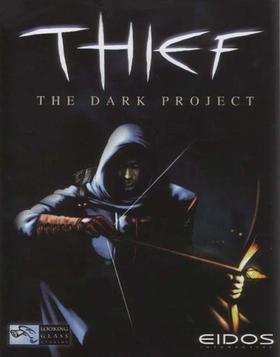
Sneaking around and snagging loot, avoiding guards and critters, is all well and good, but Thief had one other ace up its sleeve: the "missions" in which this gameplay took place were often HUGE. A single mission could take the form of scoping out a mansion, or a museum, or a church... and the church's grounds, and a network of caves / crypts underneath... and the adjoining sewer system. Or you could find yourself in a sizeable section of a dark-ages-themed city. The diversity of situations, places, events and Stuff To Do in Thief is another string to its bow. One moment you could be running from guards, or sneaking past them, scouting city roof-tops for vantage points of entry, raiding old crypts, desecrated tombs, or avoiding shambling unholy entities in defiled cemetaries, chapels.
 In opposition to the extensive dumbing-down and "over-tutorialisation" of today's games, there are no quest arrows, there are no waypoints. You are given objectives, you MIGHT have a map, and you are placed in a position within the mission gameworld and allowed to go where you wish, and do as you please. Looking Glass never insulted the player's intelligence, this was another of their games that gave you a ton of things to do, and allowed you to discover and explore at your leisure, learning the game "system" as you progressed. Sadly, no-one cares to produce a game that does such things any more.
I'm simplifying the game mechanics for the purposes of brevity so please check out Wikipedia for a more detailed run-down on the series. The point of this post is that, while the gameplay in Thief still holds up, 13 years on, the visuals are rather lacking technically (though not artistically). Not that I'm personally bothered about this, but amongst other reasons (and the lack of legally-released source code for Thief's "Dark Engine"), this is why fans have taken it upon themselves to release their own Thief...
The Dark Mod is a free "add-on" package for Doom 3, which aims to re-create the Thief experience from the ground up, using the now open-sourced, and more modern graphics id tech 4 engine. And it thoroughly succeeds. It does not currently feature a campaign of missions, rather it is a "tool set" of materials that one may use to create and play missions. Thankfully many fans have already created a good amount of missions in the few years since its release. Hot on the heels of update 1.07, which adds yet more superb content, here's some thoughts on a few of the missions I've been playing:
Winter Harvest by Shadowhide
 |
| Winter Harvest (image from The Dark Fate) |
Not that there aren't dark cathedrals, twisted pagans, huge spiders, and well-stocked castle libraries to plunder and explore, but the dense winter forest one finds oneself in is an usual locale, and certainly not unwelcome. It's pleasant to have some friendly AI that chats to the player, also. There is a curious lack of readables, which some may find disappointing, and a few "doors that aren't doors" (side rooms with a few extra bits of loot would have been nice), but this is recommended nevertheless. Solid thumbs up.
Caduceus Of St. Alban by Bikerdude
 |
| Caduceus Of St. Alban (image from The Dark Fate) |
You are tasked to retrieve a sacred relic from a Builder outpost. So this is out-and-out classic sneaking all the way. Many methods of entry and egress, many floors to explore (also various ways to reach them), and towering heights to visit. Some interesting readables, solid texturing and a successful atmosphere make this a must play. Shame there isn't more of it.
Flakebridge Monastery by Jesps
 |
| Flakebridge Monastery (image from The Dark Fate) |
I'm pleased to say that, finally, The Dark Mod has an exemplary example of undead lootery in Flakebridge Monastery. A sizeable mission, with a very well fleshed-out gameworld: the player will visit a bell tower, the guard and guest quarters, an infested kitchen, and a very dangerously haunted chapel. They all connect in a coherent manner, and finding your way between them is half the challenge! There's a bit of roof-top shenanigans too, which feels deliciously dangerous.
My only complaint would be that the crypt section was disappointingly small, and could stand to have far more dangers present for the player to over-come. Otherwise, this is my favourite TDM mission so far and a fantastic few hours of skulking were had playing it.
The Transaction by Sotha
 |
| The Transaction (image from The Dark Fate) |
There is little scope for exploration, few side-quests (but there IS a great one in there, that's one distressed damsel), but this matters less when one considers the plot. There are suprises aplenty, some good readables, and even some purposeful - as opposed to gratuituous - combat (one of The Dark Mod's weakest areas, and the team would do well to overhaul the combat and make it closer to Thief's).
Small cutscenes are used to great effect, and the city area - small though it is - is rendered with good texturing, modelling and some well-placed puddles, torches, convincing weather effects. Just a shame so little of it is explorable: there are rather too many unuseable doors.
Still, it's absolutely worth playing - though start with Mandrasola, it's the first in the series - and carves out another niche of stealth role play excellence that The Dark Mod provides so well.
Monday, 26 December 2011
Autechre 2010: 28th Century Music Now
The following are two reviews I composed for Autechre's last two album releases, initially posted over at discogs (along with quite a few more about other artists and albums).
A belated Merry Christmas, and happy new year, to you for reading. :) Here's to a productive 2012.
Oversteps
 After pandering to the pseudo-intellectual cretins in their fan-base for the last 10 bloody years, Autechre have FINALLY written an album that is listenable. Because, on Oversteps, they are writing melodies again. And they're really fucking good ones at times. Gone, thankfully, also are the endless cockwaving drum/glitch bollocks of Draft and Untilted. And most of the tunes on Oversteps sound like fully fleshed ideas, not experiments in collage a-la Quaristice.
Oversteps sounds like a natural continuation of EP7 only with even more complex drum rhythms (thankfully not the headache-inducing pummeling fanboy-wank that is LCC and the like) and pristine production: the FM sounds cleaner and crisper. The rhythms are more intriguing, and the melodies they employ here are developed to a far greater degree than even the best LP5 or EP7 had to offer. I'm hearing shades of Tangerine Dream, Telex, Vangelis, and Moskwa TV in this album, so that's a pretty good start. Oh, and it's not MINIMAL either, thankfully.
Ilanders is effectively Robot-Jazz. Its "structure" is little more than that of a trad-jazz jam, opening and closing with the main theme and exploring it from every angle in between. I'm no jazz fan, but the idea is sound. The underlying rhythm is some concotion of electro crossed with breaks and hip-hop. The roiling pads underneath the crunchy FM drums and plinking melodies are a welcome return after the last 10 years. Proof that Sean and Rob can write them!
Treale is where they take the whole "reform, redevelop, destroy, then reform again" ethic on their melodies about as far as they ever have. This is 100% composition right here, computer-aided or not. I find it hits my personal "melodic threshold" at times, like a lot of jazz tunes tend to, but I would still have the interlocking FM tones of Treale than ANY of the 7+ minute drum wank exercises of Confield, Draft or Untilted. Nice that they stick to a fairly simple hip-hop/big-beat style rhythm and let the synths "be complex" for a change. Well done, lads!
Known(1) is a mess. Oversteps is - on every other track - a brooding aural dystopia, somewhat meditative and atmospheric with the bare hint of malignancy, but Known(1) is totally at odds with this vibe, coming across more as a twisted EP7 outtake with extra-trashy FM tweaking thrown in. They over-do the out-of-tuned'ness on this one. Thankfully it's the only track that is sub-par.
See On See is just arpeggiated bliss, with a bass-line continuously morphing underneath some lovely higher-octave tones. Call it a requiem, it's beautiful. I haven't said that about an Autechre song since Drane! Os veix3 and O=0 contain some of the most emotionally resonant and melancholic melodic phrases I've heard from Ae, as well as some fascinating key changes in the latter. st epreo has a less distinct hook than other tunes, and is more drum-focused, but it doesn't fall into the Untilted trap of endless clatter. d-sho qub has an infectious, slightly-shuffled "fast hip-hop" rhythm and it's hard not to love those hugely satisfying, crunchy snares blasting away under more very memorable synth lines, coming across "happier" here (love the way it devolves into vocal choruses, too!). The album finishes on the more minimalistically-composed Yuop, which gradually develops into lots of noisy pads and synth "wibbles". It works well as a closer.
As an aside, I find it hilarious that some people complain that there's been some blatant use of plugin patches from Tassman and Reaktor. If this is true, so what? Ae love FM, and if it works, just fucking use it. I can't be the only one that's lived through the naughties' endless sound exploration and gradual detachment from conventional composition techniques (ANYTHING from Mille Plateaux Records, for example), and find that 90% of it is barely interesting for a few listens, then just gets boring. It may be "exploring new sonic frontiers", but ultimately, focusing upon sound creation and texture as opposed to melody, often leaves you with music that is forgettable, for-occasion, aural wallpaper. That is never a problem on Oversteps.
Sean and Rob do a FAR better job of exploring melancholic, detached alienation on Oversteps using MELODIES than they do pissing about with drums and stepping on Venetian Snares' toes (Draft, Untilted, Confield). If you have any interest in challenging electronic music, you want to hear this. If you like Ae but found their previous albums lacking for any reason, believe me: you must hear this. If you spooge copiously over FM synthesis, then I'm surprised you're reading this and not listening to the bloody thing already. If you'd like to hear the "genre" of IDM broken and completely destroyed, well that's probably some personal issues you might need to work out, but don't let that stop you from trying Oversteps. Heck, I'm no "fan" of Autechre OR IDM, and I've fallen completely in love with this album. It's hard to at first, this is Autechre, not Arovane (who, melodically, came across as more of a romantic) but this is Sean and Rob showing their 100% robotic, programmed, circuit-driven souls. And I wouldn't want it any other way. Not perfect - ditch Known(1) - but bloody close. 10/10.
P.S. Oversteps makes for a superb alternative soundtrack to System Shock. :)
Move Of Ten
 Move Of Ten has put to rest fears that Autechre were committed to the high-functioning-autistic-beats of their mid-naughties records, they're now following a more melodic and textural direction, at least for now. Though you wouldn't think it on first listen, MOT is bookended by two pieces that are little more than designed to "please the fans": Etchogon-S and Cep puiqMX.
Etchogon has a pretty standard - by Ae "standards" - glitch-hop-on-smack rhythm, occasionally allowing in some prickly synth bleeps that never really form a solid hook. The drums, bass and synths develop and fall away in typical "pseudo-random" Autechre fashion. With Cep puiqMX, the story is very similar: noisey glitched beats, punctuated by vacuous, reverb-plastered single-chord synth blasts. It's the usual LCC-style near-self-parodying concoction of endlessly glitched beats and almost nothing melodic. Both tracks will induce major hard-ons in elitists and IDM producers but thankfully, that isn't the case with the rest of the EP.
nth Dafuseder.b is one of the big hitters on Move Of Ten. After the initial shock of the shameless stealing of d-sho qub's drum patterns, cool little repeated "rhodes" style keys play while drenched in reverb, and the occasional appearance of a BOC-ish "flute" synth plays some surprisingly twee melodies. Shocking, Ae are clearly going soft! OMGWTFBBQ tehy stol BOC-synths! (Note how it makes for a better "BOC tune" than anything on Campfire Headphase... CONSPIRACY!)
no border switches between almost-4/4 and some amalgam of big-beat and dubstep, bursts of noise produce the rhythmic backing to more distant, emotive FM pads and stabs. Not as sucessful as similar pieces on Oversteps, but that dark, emotionally-detached feeling prevails and is still enticing. pce freeze 2.8i has a truly addictive "electro-big-beat" rhythm, with huge drums underpinning a properly solid filter-shaped synth hook that continues to morph, occasionally descending into noise. The spontaneous clickery of the end with one final shout of the riff is a great way to conclude.
4/4 Autechre is good. y7 has a melange of dark synthery around that incessant 4/4 pulse. Oh and two words: AUTECHRE ACID! There's definitely a kinda-303 synth part squelching away here and there. No, there's no hook, but I'm not looking for one when everything else in the track makes up for a great "electronic jam". Later they drop the bomb that is M62. Wow, is this Ae really doing 4/4 again? Sell-outs! Okay now the fanbois have gone crying, let's enjoy some ae-trance! Put the usual multi-layered FM synth stabs and pads to the most basic of electronic rhythms, and it is just as enjoyable as glitch-hop, hip-step, or whatever you'd call Ae's more "traditional" rhythms. It's another dark synth and texture jam across 6 minutes, with continuously morphing synths, joined later by some pads. Then around the 4th minute it all breaks down to the kick and one synth, and stays more "minimalistic" until the end. Pretty simple structurally - by Ae standards - but completely enjoyable and accessible! Yes, Ae fanboys, I just used the word "accessible" again in an Autechre review! Punch that disagree button with all your elitist, self-righteous might!
iris was a pupil is solid evidence that these tracks are taken from Oversteps sessions. It has very similar metallic FM synths to redfall and see on see, drenched in reverb, with some more squelchy FM/303-type sounds bouncing around the edges playing counter melodies, until it becomes much darker around the 2-minute mark. The synth riffery doesn't stick quite as well as most of the Oversteps tunes, though. No don't say it, it's not an out-ta*SLAP*...
Many songs feel less structured than Oversteps pieces, and more like jams. No bad thing, though, since most don't last much past 5 or 6 minutes. I don't require hooks, just interesting stuff going on beyond spastic drumming! There's definitely much more than that going on during Move Of Ten's 40+ minutes. Finally, I'm just so pleased to say that Ae are stepping away from autism-stroking drums for a while. By keeping them simple(r) and instead going nuts with the textures and synths, Autechre are going for exactly the opposite of the composing approach they took on Untilted and Draft. And it's TREMENDOUSLY more invigorating and enjoyable as a result. B+ or 8/10.
Thursday, 24 November 2011
Some brief melodic observations
Perc - Wicker & Steel (Perc Trax 2011)
Boom, boom, boom, boom, crackle, bam, crunch, minimal bandsaw techno. Occasional punchiness doesn't make up for the lack of much going on in most of the tracks. Better than Redshape though, by miles.
Oriol - Night & Day (Planet Mu 2010)
Fantastic melodic funk / disco / electro / IDM crossovering into... Oriol makes his own sound here. Successfully merging many of his inspirations into something that's more than the sum of its parts. Not necessarily perfect, but there are tons of great moments, e.g. the Tom Jenkinson-esque bass throbbery set to loungy piano and spacey vocals on Spiral, Night And Day's REAL dubstep/breaksy beats set to space pads and gradually rousing space synth solos, or Flux's immediately memorable arpeggio set to 4/4 beats that morph effortlessly into breaksy/big-beat rhythms. Top work.
Hudson Mohawke - Satin Panthers (Warp 2011)
Warp "darlings" are rarely all they're cracked up to be, but Hud Mo breaks out some surprisingly melodic wonky/IDM/hop on this EP. Thunder Bay's trumpet bass-farts and Cbat's annoying glitchery are the only issues. Octan, Thank You and - particularly - All Your Love all burst with melodic synth explosions set to solid beats and breaks. More of this, please!
Radiohead - The King Of Limbs (Ticker Tape / XL 2011)
The further away from mumbling emo drudgery these guys get, the more fascinating they become. I would even dare to say they sound positively euphoric at times, on this highly experimental but thoroughly engrossing album. Bloom recalls Four Tet's style with its thickly atmospheric design, tumbling drums, and distant pads. But - crucially - these electronics are tempered with memorable vocal lines from Thom. The descending hook on Little By Little, the quiet down-tones on Codex, and the prickly rhythms of Morning Mr Magpie are just some of the moments that stand out. Worth seeking out the separate 2-tracker Supercollider / The Butcher also. I'd argue they form an essential addendum to TKOL.
Thursday, 27 October 2011
Back to Doom
Amongst the slow, slow progress modeling architecture and props for my game project, I've been taking some time to return to playing Doom.
Every so often, I peruse the newest maps or "WAD" releases over at Doomworld. Doom has an enduring simplicity in its gameplay, and vast possibilities allowed by its level design. Fans are still releasing new levels, map packs and addons for it to this day.
Paired with a "source port" such as GZDoom which adds many useful features to the game such as high video resolutions, mouse-look and various graphical improvements, Doom continues to make for a compelling and satisfying sci-fi action thriller of a game. Certainly there aren't any FPSs being released any more where you can expect - shock horror - more than one enemy on screen at once? Let alone two or more of different types.
So, here are the map packs I've been playing lately. I'd highly recommend taking a look, there's more fascinating level design in one Doom level than there could ever hope to be in five hours of Call of Duty.
UNLOVED by BlueEagle
 Author BlueEagle cites Silent Hill as an influence upon this staggeringly well designed map set. You wake up - as you do - in your bedroom, only to find that things aren't as they should be. Unable to leave your house, you find an eldritch-looking entrance to a gothic dungeon, infested with critters that must be put to rest, with haste!
Unloved exudes Lovecraftian, gothic bleakness from every pore. The "house" is designed as a hub, though progression is linear until you have all the keys necessary to open the final door. I've been assaulted from all corners, distances, and often in enclosed spaces. Upside-down studies, corridors resembling decrepit hostel halls, crumbling artifices and evil forests packed with corpses that come to life to fight you.
And the great thing is, BlueEagle is currently producing the sequel! Unloved does suffer from "key/switch/door-hunt" syndrome (some might call "Hexen syndrome"), but it is tremendously well balanced, even quite possible to play through on UV difficulty using "fast monsters" (a special option to further push the difficulty of the game).
Top marks, thoroughly imaginative and simply great fun.
Here is a video playthrough.
LUNATIC by Skillsaw
 Skillsaw seems to be a relatively recent addition to the Doom fanbase, but that hasn't diminished his impact on the scene. I've only played this one map pack by him so far, but it's up there with the likes of Scythe.
As the title and screenshot hint, this map pack takes place on the surface of the moon, though this is mixed with a few tech bases. Combine the relatively unique (in the Doom world) scenario with expertly-placed monsters, absolutely gorgeous visuals, and near-perfect difficulty pacing, and you have some top quality Dooming.
There's some clever secrets, interiors are well-mixed with exteriors, and the finale is a healthy challenge which I shan't give away, but is a fitting end to the pack.
There were one or two moments where UV / fast monsters made the maps a touch too difficult without a bit of crafty quick-saving. If it gets to this point then I feel like I'm having to cheat to continue, but thankfully Lunatic doesn't quite tip into the realms of the unfair.
Deserves a Cacoward, highly recommended.
Here is a video playthrough.
NO REST FOR THE LIVING by Russell Meakim and Richard Heath of Nerve Software
 This is an additional 9 levels available when one buys Doom 2 on the XBOX 360 live arcade, so I cannot link to a download here.
Unlike the previous two map packs, No Rest For The Living is an official Doom release! The first commercial map pack since Final Doom was released in 1996. Also unlike many fan-made maps, it is also resolutely "vanilla" in appearance. This certainly isn't a negative and, if anything, speaks volumes of the visual diversity capable with the Doom engine.
Enemy placement is perfect, the gradual difficulty curve is well-placed, and the levels exude that classic Doom-ness (a proper technical term, dontchaknow?), where you'll find yourself in tech bases, green marble hellrooms and dingy, eldritch pits fighting off enemies from every direction and often many of them at once. There are tons of secrets, too. No Rest steps out of the vanilla Doom tropes on occasion though, with some excellent outdoor stone / dirt "canyon" areas with imps and arachnotrons sniping at you from the distance, while you dance with nearby revenants and demons. Another example of the tremendous diversity Doom's gameplay is capable of presenting the player.
It's just a shame there's rather too little of it. Russell and Richard should consider producing further maps, and preferably available for the PC in some official and legal capacity, please!
Here is a video playthrough.
Wednesday, 13 July 2011
Are the 80s back? Well for gaming they might be.
I'm old enough to remember baggies the first time. 'Avin it. Largin' it, even! Of course back in the late 80s/early 90s, when acid was popular (I mean the music, of course), rave became massive (say it loud!) and many gamers were to be found browsing through the racks of my local newsagent, to find that treasure trove much loved by gamers of the time: computer cassettes. Orange for Amstrad CPC, yellow for Spectrum? I forget which for Commodore 64... but yes, going entirely on some tiny screenshots and provocative (or not) hand-drawn cover art, finding a diamond in the rough happened all too rarely. These were all independently-created games, published by "real publishers" but the people involved could usually be counted on your hands.
After the rise of the PC in the 90s, Amigas and all the 8-bit machines fell into sharp decline. More and larger software teams were putting out games, and big boxes were in (and so was the hand-drawn art, thankfully). This era has a lot of collectables, and sadly to this day I cannot count System Shock in my collection, so collectable it is.
With the advent of the Playstation 2, and the turn of the century, gaming became big business. Small development teams were a rarity, and it was becoming increasingly more common to find AAA games being produced for PS2 or PC by teams comprising hundreds of people. The notion of "indie" gaming was a flicker in Jonathan Blow's eye. It would have seemed likely that the XBOX 360 era, with its stupendously high production values, would be the final nail in the coffin for "indie" or "independent" video and computer game production. Well, thankfully, it wasn't.
All of the three current major consoles have their "online" stores, and - particularly the XBOX Live Arcade - feature many independently-created games, including the mighty time-trickery of Braid. There are others that prompted this movement beforehand, but I mention Jonathan Blow and his game Braid, for a reason: Many will, and do cite it, as probably the most important independently developed game that was released commercially in recent gaming history.
And not even for the rather cool and quirky time-shifting gameplay. No, that wasn't important. What mattered was the notion that, again, an "indie" game could have commercial potential, and could even be distributed and sold on a major game console.
The short of it is, the last few years have seen an explosion in independent game design again. And not only for online game console stores, but for the more recent - and possibly even "bigger" - iTunes / iOS app store. There are now many and regular releases on mobile platforms such as iOS and Android, let alone PC, of independently-developed games. Often by small teams, or even just one or two people. Heck, the last game I purchased was Deadly Dungeons - a first-person action RPG for Android phones and tablets - and it was developed çalmost entirely by one person.
It is a good time to be a game developer.
More discussion and news on independent games can be found at IndieGames.com and TIGSource.
(As for my current progress, I am steadily learning the process of creating colour maps, normal maps, specular maps and alpha maps. Vital stuff, and I'm most of the way there already.)
Subscribe to:
Posts (Atom)